It’s easy to get swept up in the current tech narrative, isn't it? The air is thick with talk of AI, and every company with a server rack or a line of code is suddenly an "AI play." But as anyone who’s spent time sifting through financial statements knows, the market often paints with a broad brush when the underlying data demands a finer point. We’ve seen the impressive run-ups in names like `nvidia stock` and `amd stock`, and naturally, that rising tide has lifted other boats, including the `dell stock price`. But the question we need to ask, the one that truly matters for long-term investors, is whether Dell is riding the wave or generating its own propulsion.
Let's cut right to it. The current AI boom is, in essence, a digital gold rush. And in any gold rush, there are the prospectors digging for the shiny stuff, and then there are the businesses selling the picks, shovels, and provisions. Nvidia, with its dominant position in high-performance GPUs (specifically its `nvda` chips), is unequivocally selling the picks and shovels. They are the essential enabler, the very engine of this revolution. `AMD`, while playing catch-up, is also a critical supplier in this foundational layer, offering a viable, albeit smaller, alternative. Their valuations reflect this direct, almost monopolistic, leverage on the core AI processing demand.
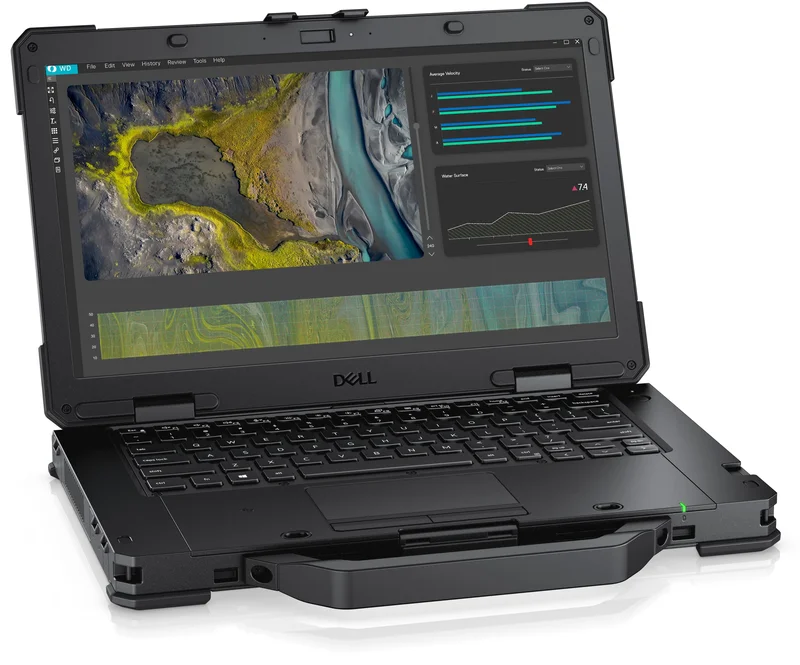
Now, where does Dell Technologies fit into this picture? Dell sells the infrastructure: servers, storage, networking. They're assembling the powerful machines that house those GPUs, ensuring they run efficiently, scaling up data centers for the AI workloads. Think of them as the general store in the mining town. Everyone needs a place to buy their tools, their food, their shelter. Dell provides the digital equivalent of that essential infrastructure. This is why we've seen the `dell stock price today` climb significantly; the demand for AI servers, specifically those optimized for GPU integration, is clearly robust. Online chatter and anecdotal reports from industry conferences suggest a substantial backlog for Dell's PowerEdge AI servers. However, the exact revenue contribution from these pure AI-specific servers, as a proportion of Dell's total infrastructure solutions group, isn't always delineated with the granular precision I'd prefer to see in their quarterly reports. It’s a point of minor frustration for an analyst like myself, trying to dissect the true organic growth drivers.
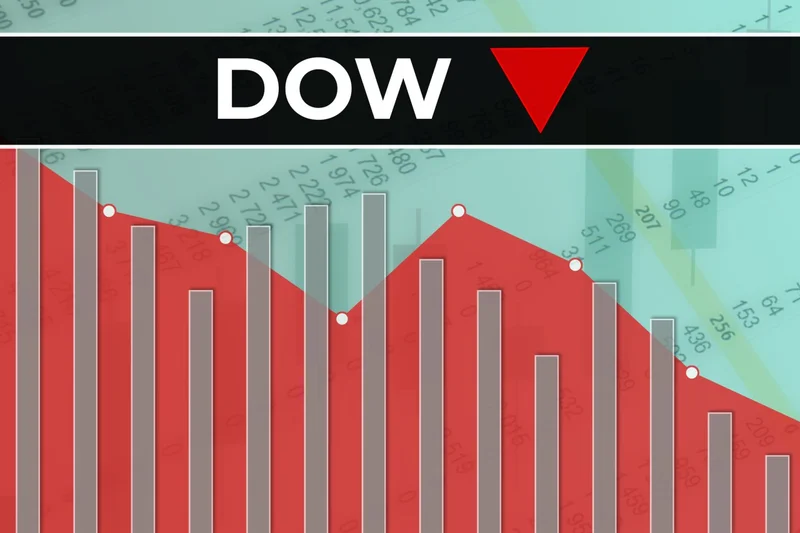
The market's enthusiasm for Dell, while understandable, needs to be tempered with a dose of numerical reality. While Dell benefits from selling the complete server stack, its margins on these integrated systems, particularly when factoring in the cost of those high-demand GPUs, are inherently different from Nvidia's pure-play chip margins. This isn't a critique of Dell's business model – it's a statement of fact regarding the value chain. Dell is a crucial partner, but its leverage comes from integration and scale, not from proprietary chip architecture, which is where Nvidia truly shines. My analysis suggests that much of Dell's recent surge, particularly when viewed on the `dell stock graph`, is a direct correlation to the broader AI infrastructure spend, rather than a unique, defensible moat in the AI value chain that rivals the likes of Nvidia or even AMD.
When we look beyond the immediate AI hype, the landscape becomes more nuanced. Other tech giants like `google stock`, `meta stock`, and `tesla stock` are also heavily investing in AI, but they're largely consumers of the infrastructure, not primary providers. Their AI initiatives are geared towards enhancing their core products, from search algorithms to autonomous driving, creating massive internal demand for GPUs and servers. Then you have companies like `pltr stock` (Palantir), which are focused on AI software and data analytics, operating a layer above the hardware. This broader context helps frame Dell's position: a critical enabler, yes, but one whose fortunes are somewhat tethered to the capital expenditure cycles of these larger AI consumers.
I've looked at hundreds of these filings, and what I find genuinely puzzling sometimes is the market's tendency to extrapolate a direct, linear benefit across an entire supply chain without adequately discounting for the various layers of margin and competitive pressures. The market is currently valuing Dell's AI server business with what appears to be a generous multiple, assuming continued hyper-growth. But what happens if the pace of GPU innovation slows, or if new, lower-cost competitors emerge in the integrated server space? Or, to be more exact, if the rate of growth in enterprise AI adoption normalizes from its current frenetic pace? These are the questions that keep me up at night, the ones that often get overlooked when the narrative becomes too dominant. The method by which some analysts project future revenue for companies like Dell, often by simply multiplying current GPU demand by an assumed server attach rate, feels overly simplistic and fails to account for potential shifts in the competitive landscape or supply chain dynamics.
Dell is undoubtedly a beneficiary of the AI revolution. They are building essential hardware, and their expertise in enterprise solutions is invaluable. But let's not confuse being an essential component with being the core intellectual property driver. The `dell stock price` reflects a company doing well in a booming market. However, the long-term sustainability of that growth, particularly at its current valuation, hinges on factors that extend beyond simply "more AI." It depends on their ability to maintain margins in a competitive hardware market, to innovate beyond simply integrating third-party GPUs, and to demonstrate a clear, defensible differentiation in their AI server offerings. Otherwise, they risk being seen as a high-volume, lower-margin player in a game dominated by the chipmakers.
The recent run in `dell stock price` is impressive, no doubt. But for investors, the true test isn't just riding the initial wave; it's understanding the underlying currents. Dell’s role in the AI ecosystem is crucial for implementation, but the ultimate value capture often lies further up the stack, with the companies creating the foundational AI models or the specialized chips that power them. We need to be precise about what we’re investing in: an enabler, or a primary driver. The distinction, in this market, is worth billions.